
Cronaca

Artemis, equipaggio rientrato dalla Luna: recupero tra le difficoltà

La capsula Orion è ammarata nell’oceano Pacifico, al largo della California: a causa delle forti correnti non è stato possibile stabilizzare il veicolo e accompagnarlo in sicurezza
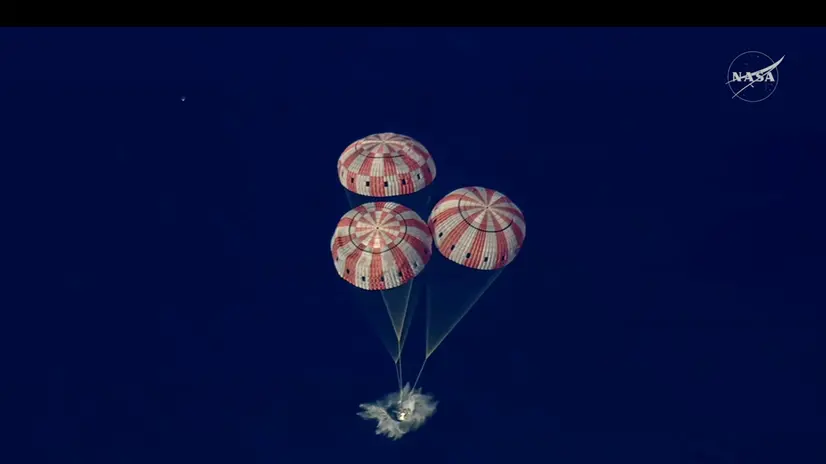
  • epa12881907 A handout screen grab taken from a video and made available on 10 April 2026 at 18:08 CST by the National Aeronautics and Space Administration (NASA) shows the Orion spacecraft 'Integrity' during splashdown in the Pacific Ocean, 10 April 2026. EPA/NASA HANDOUT HANDOUT EDITORIAL USE ONLY/NO SALES
    L'ammaraggio della capsula Orion - Foto Nasa
  • epa12882008 A handout photo made available by the National Aeronautics and Space Administration (NASA) shows NASA astronaut Victor Glover (C), Artemis II pilot being assisted off the flight deck after arriving aboard USS John P. Murtha after he and fellow crewmates NASA astronauts Reid Wiseman, commander; Christina Koch, mission specialist; and CSA (Canadian Space Agency) astronaut Jeremy Hansen, mission specialist were extracted from their Orion spacecraft after splashdown, in the Pacific Ocean off the coast of California, 10 April 2026. NASA’s Artemis II mission took the quartet on a nearly 10-day journey around the Moon and back to Earth. Following a splashdown at 5:07 p.m. PDT (8:07 p.m. EDT), NASA, U.S. Navy, and U.S. Air Force teams worked to bring the Orion spacecraft aboard the recovery ship. EPA/BILL INGALLS / NASA / HANDOUT HANDOUT EDITORIAL USE ONLY/NO SALES
    L'ammaraggio della capsula Orion - Foto Nasa
  • epa12882009 A handout photo made available by the National Aeronautics and Space Administration (NASA) shows NASA astronaut Reid Wiseman, Artemis II commander sitting in a Navy MH-60 Seahawk from Helicopter Sea Combat Squadron (HSC) 23 on the flight deck of USS John P. Murtha after he and fellow crewmates NASA Astronauts Victor Glover, Christina Koch, and CSA (Canadian Space Agency) astronaut Jeremy Hansen, were extracted from their Orion spacecraft after splashdown, in the Pacific Ocean off the coast of California, 10 April 2026. NASA’s Artemis II mission took the quartet on a nearly 10-day journey around the Moon and back to Earth. Following a splashdown at 5:07 p.m. PDT (8:07 p.m. EDT), NASA, U.S. Navy, and U.S. Air Force teams worked to bring the Orion spacecraft aboard the recovery ship. EPA/BILL INGALLS / NASA / HANDOUT HANDOUT EDITORIAL USE ONLY/NO SALES
    L'ammaraggio della capsula Orion - Foto Nasa
  • epa12882010 A handout photo made available by the National Aeronautics and Space Administration (NASA) shows NASA astronaut Reid Wiseman (C), Artemis II commander being assisted off the flight deck after arriving aboard USS John P. Murtha after he and fellow crewmates \wiseman2\ were extracted from their Orion spacecraft after splashdown, in the Pacific Ocean off the coast of California, 10 April 2026. NASA’s Artemis II mission took the quartet on a nearly 10-day journey around the Moon and back to Earth. Following a splashdown at 5:07 p.m. PDT (8:07 p.m. EDT), NASA, U.S. Navy, and U.S. Air Force teams worked to bring the Orion spacecraft aboard the recovery ship. EPA/BILL INGALLS / NASA / HANDOUT HANDOUT EDITORIAL USE ONLY/NO SALES
    L'ammaraggio della capsula Orion - Foto Nasa
  • epa12882007 A handout photo made available by the National Aeronautics and Space Administration (NASA) shows a general view of NASA astronaut Christina Koch, Artemis II mission specialist being assisted off the flight deck after arriving aboard USS John P. Murtha after she and fellow crewmates NASA astronauts Reid Wiseman, commander; Victor Glover, pilot; and CSA (Canadian Space Agency) astronaut Jeremy Hansen, mission specialist were extracted from their Orion spacecraft after splashdown, in the Pacific Ocean off the coast of California, 10 April 2026. NASA’s Artemis II mission took the quartet on a nearly 10-day journey around the Moon and back to Earth. Following a splashdown at 5:07 p.m. PDT (8:07 p.m. EDT), NASA, U.S. Navy, and U.S. Air Force teams worked to bring the Orion spacecraft aboard the recovery ship. EPA/BILL INGALLS / NASA / HANDOUT HANDOUT EDITORIAL USE ONLY/NO SALES
    L'ammaraggio della capsula Orion - Foto Nasa
  • epa12881899 A handout screen grab taken from a video and made available on 10 April 2026 at 17:52 CST by the National Aeronautics and Space Administration (NASA) shows Earth as seen from the Orion spacecraft 'Integrity' during its re-entry, 10 April 2026. The spacecraft is expected to reach speeds of up to Mach 32 during atmospheric re-entry. EPA/NASA HANDOUT HANDOUT EDITORIAL USE ONLY/NO SALESHANDOUT EDITORIAL USE ONLY/NO SALES
    L'ammaraggio della capsula Orion - Foto Nasa
  • epa12882005 A handout photo made available by the National Aeronautics and Space Administration (NASA) shows NASA astronaut Victor Glover (L), Artemis II pilot, and NASA astronaut Christina Koch, Artemis II mission specialist are seen sitting on a Navy MH-60 Seahawk from Helicopter Sea Combat Squadron (HSC) 23 on the flight deck of USS John P. Murtha after they and fellow crewmates CSA (Canadian Space Agency) astronaut Jeremy Hansen, Artemis II mission specialist, and NASA astronaut Reid Wiseman, Artemis II commander, were extracted from their Orion spacecraft after splashdown, in the Pacific Ocean off the coast of California, 10 April 2026. NASA’s Artemis II mission took the quartet on a nearly 10-day journey around the Moon and back to Earth. Following a splashdown at 5:07 p.m. PDT (8:07 p.m. EDT), NASA, U.S. Navy, and U.S. Air Force teams worked to bring the Orion spacecraft aboard the recovery ship. EPA/BILL INGALLS / NASA / HANDOUT MANDATORY CREDIT: (NASA/Bill Ingalls) AFS 8/101 - PermanentHANDOUT EDITORIAL USE ONLY/NO SALES
    L'ammaraggio della capsula Orion - Foto Nasa
  • epa12881909 A handout photo made available by the National Aeronautics and Space Administration (NASA) shows NASA's Orion spacecraft 'Integrity' as it splashes down in the Pacific Ocean, 10 April 2026. The mission, crewed by NASA astronauts Reid Wiseman, commander, Victor Glover, pilot, Christina Koch, mission specialist, and CSA (Canadian Space Agency) astronaut Jeremy Hansen, mission specialist, completed a flyby of the Moon and returned to Earth. EPA/BILL INGALLS / NASA HANDOUT HANDOUT EDITORIAL USE ONLY/NO SALESHANDOUT EDITORIAL USE ONLY/NO SALES
    L'ammaraggio della capsula Orion - Foto Nasa
  • epa12881925 A handout photo made available by the National Aeronautics and Space Administration (NASA) shows NASA's Orion spacecraft floating as recovery teams work to secure the spacecraft ahead of transferring Artemis II crewmembers to USS John P. Murtha after splashdown in the Pacific Ocean, 10 April 2026. The mission, crewed by NASA astronauts Reid Wiseman, commander, Victor Glover, pilot, Christina Koch, mission specialist, and CSA (Canadian Space Agency) astronaut Jeremy Hansen, mission specialist, completed a flyby of the Moon and returned to Earth. EPA/JOEL KOWSKY / NASA / HANDOUT HANDOUT EDITORIAL USE ONLY/NO SALES
    L'ammaraggio della capsula Orion - Foto Nasa
  • epa12881912 A handout photo made available by the National Aeronautics and Space Administration (NASA) shows NASA's Orion spacecraft 'Integrity' as it descends by parachute in the Pacific Ocean, 10 April 2026. The mission, crewed by NASA astronauts Reid Wiseman, commander, Victor Glover, pilot, Christina Koch, mission specialist, and CSA (Canadian Space Agency) astronaut Jeremy Hansen, mission specialist, completed a flyby of the Moon and returned to Earth. EPA/BILL INGALLS / NASA HANDOUT HANDOUT EDITORIAL USE ONLY/NO SALES
    L'ammaraggio della capsula Orion - Foto Nasa
  • epa12881926 A handout photo made available by the National Aeronautics and Space Administration (NASA) shows a US Navy MH-60 Seahawk from Helicopter Sea Combat Squadron (HSC) 23 flying overhead as small boats approach NASA's Orion spacecraft with Artemis II crewmembers after splashdown in the Pacific Ocean, 10 April 2026. The mission, crewed by NASA astronauts Reid Wiseman, commander, Victor Glover, pilot, Christina Koch, mission specialist, and CSA (Canadian Space Agency) astronaut Jeremy Hansen, mission specialist, completed a flyby of the Moon and returned to Earth. EPA/JOEL KOWSKY / NASA / HANDOUT HANDOUT EDITORIAL USE ONLY/NO SALES
    L'ammaraggio della capsula Orion - Foto Nasa
  • epaselect epa12881909 A handout photo made available by the National Aeronautics and Space Administration (NASA) shows NASA's Orion spacecraft 'Integrity' as it splashes down in the Pacific Ocean, 10 April 2026. The mission, crewed by NASA astronauts Reid Wiseman, commander, Victor Glover, pilot, Christina Koch, mission specialist, and CSA (Canadian Space Agency) astronaut Jeremy Hansen, mission specialist, completed a flyby of the Moon and returned to Earth. EPA/BILL INGALLS / NASA HANDOUT HANDOUT EDITORIAL USE ONLY/NO SALESHANDOUT EDITORIAL USE ONLY/NO SALES
    L'ammaraggio della capsula Orion - Foto Nasa
  • epa12881908 A handout photo made available by the National Aeronautics and Space Administration (NASA) shows NASA's Orion spacecraft 'Integrity' as it descends by parachute in the Pacific Ocean, 10 April 2026. The mission, crewed by NASA astronauts Reid Wiseman, commander, Victor Glover, pilot, Christina Koch, mission specialist, and CSA (Canadian Space Agency) astronaut Jeremy Hansen, mission specialist, completed a flyby of the Moon and returned to Earth. EPA/BILL INGALLS / NASA HANDOUT HANDOUT EDITORIAL USE ONLY/NO SALESHANDOUT EDITORIAL USE ONLY/NO SALES
    L'ammaraggio della capsula Orion - Foto Nasa
AA

La capsula Orion è ammarata nell’oceano Pacifico, al largo della California, a sud-ovest di San Diego. Si conclude così la missione Artemis II che, a 56 anni dal volo di Apollo 8, ha riportato un equipaggio nell’orbita della Luna. Sono rientrati sulla Terra gli astronauti Reid Wiseman, Victor Glover, Christina Koch e Jeremy Hansen. Il rientro è avvenuto senza problemi: i paracadute si sono aperti regolarmente rallentando la capsula. 

«È stata una missione perfetta» – ha detto l’amministratore della Nasa, Jared Isaacman, subito dopo l’ammaraggio, mentre attendeva l’arrivo della capsula a bordo della nave di recupero –. «Sono senza parole, è stato un momento incredibile. È anche il risultato di un grande lavoro di squadra, insieme ai nostri partner internazionali». Isaacman ha ricordato l’accordo firmato recentemente con l’Agenzia spaziale italiana per la realizzazione di un modulo destinato alla futura base lunare.

«Stiamo costruendo una presenza duratura sulla Luna». Gli astronauti, ha aggiunto, «hanno dimostrato di essere grandi professionisti, grandi comunicatori e anche poeti: veri ambasciatori dell’umanità». I dati raccolti nella missione «sono preziosi per preparare Artemis III» e già dal 20 aprile inizieranno le attività nell’edificio di integrazione dei veicoli (Vab) del Kennedy Space Center.

Recupero complesso

Le operazioni di recupero hanno però registrato un fuori programma. Gli astronauti sono usciti dalla capsula Orion aiutati dal personale, ma non sono stati trasferiti subito sulla nave. A causa delle forti correnti non è stato possibile stabilizzare il veicolo e accompagnarlo in sicurezza. Mentre il personale medico entrava nella capsula per assistere l’equipaggio, un gruppo di sommozzatori, giunto con gommoni, ha tentato di sistemare il collare di stabilizzazione, una sorta di grande salvagente necessario a mantenere in equilibrio Orion. Dal centro di controllo Nasa di Houston il direttore di volo ha richiamato il personale operativo. Dopo oltre un’ora e mezza dall’ammaraggio si è deciso di far uscire i quattro astronauti, aiutandoli a salire sui gommoni.

In mare aperto gli astronauti sono stati quindi recuperati dagli elicotteri della Marina militare statunitense, che li hanno trasferiti sulla nave quasi due ore dopo l’ammaraggio. Victor Glover e Christina Koch sono stati i primi ad affacciarsi dal portellone dell’elicottero, rimanendo per qualche istante seduti sul bordo. Poco dopo sono arrivati anche il comandante Reid Wiseman e Jeremy Hansen su un secondo velivolo. Ad accoglierli, tra gli altri, lo stesso Isaacman. Tutti e quattro sono apparsi sorridenti e hanno raggiunto a piedi, seppur con passo incerto, l’infermeria di bordo per i controlli medici.


Riproduzione riservata © Giornale di Brescia

Iscriviti al canale WhatsApp del GdB e resta aggiornato

Argomenti
Icona Newsletter

@Buongiorno Brescia

La newsletter del mattino, per iniziare la giornata sapendo che aria tira in città, provincia e non solo.

Suggeriti per te

Caricamento...
Caricamento...
Caricamento...