
Italia e Estero

Code in Comune per la pausa caffè, sindaco toglie macchinette
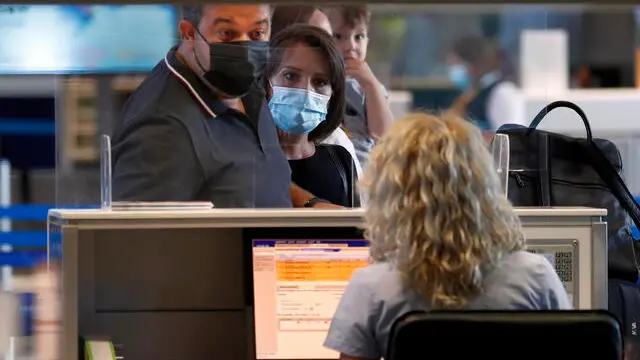
epa09412357 A masked couple wait in front of a check-in desk, after handling their electronic tickets and Covid digital certificates, at the departures terminal of the Henri-Coanda International Airport, in Otopeni, Romania, 13 August 2021. Starting Friday, August 13, the COVID Digital Certificate, a proof of vaccination against Covid-19, passing through the disease or the negative result of an RT-PCR coronavirus test, is the only document that allows entry into EU countries. The obligation to present the digital certificate refers only to the countries that require such documents at the border as well as the return to Romania from yellow and red list countries, according to the National Association of Agencies of Tourism. Crossing borders is possible without the existence of these certificates, but in compliance with the national quarantine rules of each state. The COVID digital certificate can be presented at customs both in print and on the phone, the validation being done using the QR code, which is scanned at the border. EPA/ROBERT GHEMENT
AA

PIEVE DI SOLIGO, 27 MAR - Troppe lamentale dei cittadini per le code agli sporteli comunali, e allora il sindaco ha pensato ad una soluzione drastica per evitare le 'pause' con perdite di tempo annesse: via dagli uffici le macchinette del caffè e i distributori automatici delle bevande. Accade a Pieve di Soligo (Treviso), dove il sindaco Stefano Soldan ha ordinato la rimozione di tutti i tre distributori automatici di bevande calde nei locali comunali, proprio a causa delle ripetute rimostranze di cittadini per i ritardi nell'erogazione di servizi da parte del personale. Anche perchè precedenti 'raccomandazioni' a evitare questo malcostume erano state "sistematicamente disattese". "I distributori non sono più fruibili per tutti i 56 dipendenti - ha spiegato il primo cittadino - per il comportamento di pochissimi soggetti abituati a protrarre le pause oltre il lecito. La decisione sulle macchinette è stata presa per evitare di dover intervenire con provvedimenti ad personam, che spero non siano più necessari". Soldan fa presente che la scelta "non va ad incidere sui diritti previsti dai contratti sindacali" in quanto ciascun lavoratore conserva la possibilità di effettuare le pause previste. "Qui a Pieve di Soligo i bar non mancano - conclude Soldan - ed è sufficiente timbrare il cartellino per uscire. Oppure portarsi da casa il thermos e mettersi in pausa per il tempo stabilito dal Ccnl".

Riproduzione riservata © Giornale di Brescia

Iscriviti al canale WhatsApp del GdB e resta aggiornato